Heritage as the Architectural Focus
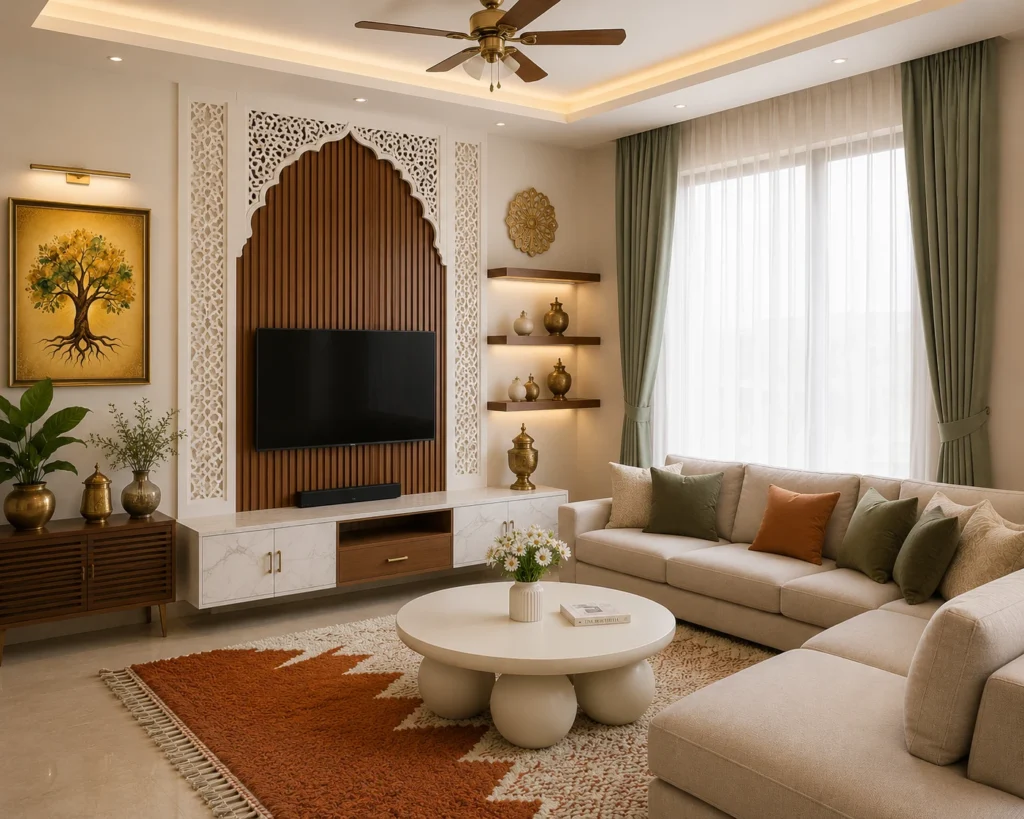
n a Heritage Contemporary living room, traditional details work best when they are treated as architectural highlights rather than decoration everywhere. A carved arch, jali panel or Indian artwork can establish identity, while clean furniture and restrained colours maintain visual balance. For villas, this approach creates character without making a large space feel formal or overloaded.
Creating a Modern yet Indian Living Space
The most successful living rooms combine cultural familiarity with present-day comfort. Warm wood, brass accents and handcrafted patterns bring depth, while streamlined storage, contemporary seating and layered lighting keep the room practical. We recommend repeating only two or three heritage elements across the space, allowing each feature to remain noticeable and the overall composition to feel calm.
A Restful Interpretation of Indian Heritage
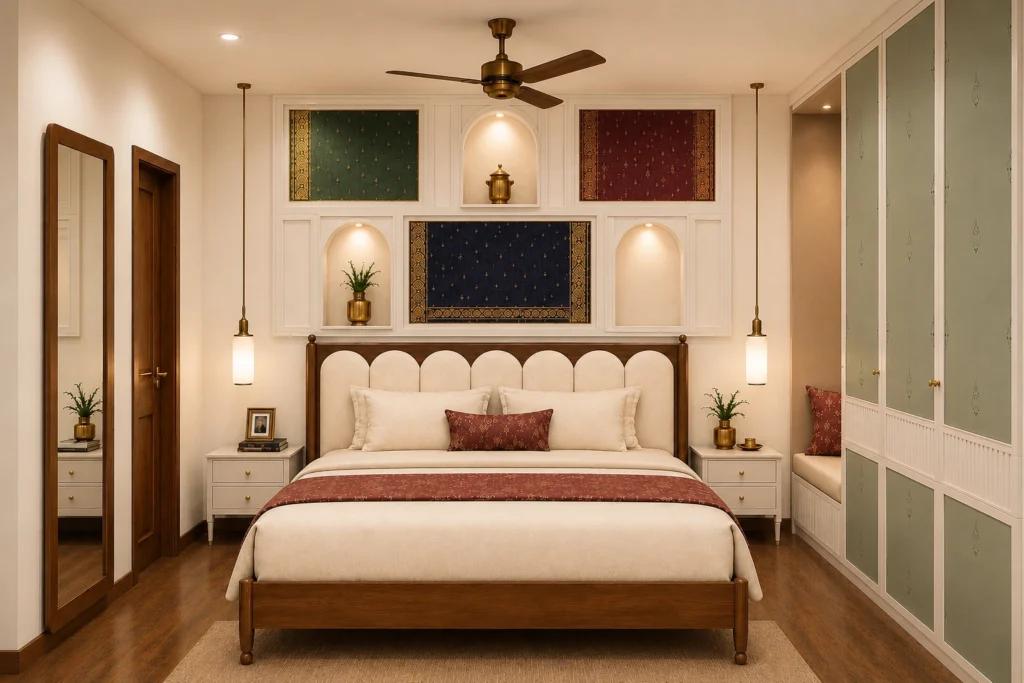
A bedroom should express heritage more quietly than a formal living area. Traditional textiles, arched forms, warm timber and brass details can introduce Indian character without disturbing the restful atmosphere. Neutral walls and simple cabinetry provide balance. In villa bedrooms, carefully positioned niches and framed fabrics can create individuality while avoiding excessive ornamentation around the sleeping area.
Tradition Designed for Everyday Comfort
Heritage Contemporary bedrooms are not created by adding traditional accessories to a modern room. The character must be integrated into the proportions, materials and detailing. A timber bed, subtle mouldings, woven fabrics and softly lit niches can work together beautifully. The key is restraint—heritage should enrich the room while comfort, storage and ease of maintenance remain central.
Looking for a Heritage Interior Designer in Bangalore?
Need Interior Designing Ideas?
Looking for another popular Interior Design Style?
A Contemporary Kitchen with Subtle Heritage Details
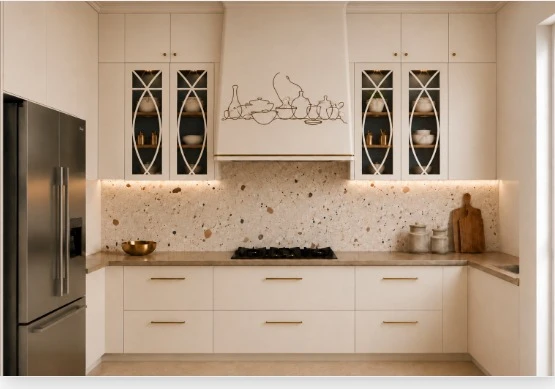
Heritage Contemporary kitchens require careful restraint because functionality must remain dominant. Clean shutters, efficient storage and durable worktops form the modern foundation. Character can then be introduced through patterned stone, framed glass cabinets, warm metal handles or handcrafted objects. For villas, this creates a kitchen that feels connected to the rest of the home without compromising maintenance or workflow
Bringing Warmth to a Modern Modular Kitchen
A modular kitchen can still carry a strong Indian sensibility without using heavy carved details. Warm neutrals, stone with natural variation, brass-toned hardware and carefully displayed ceramics add depth to clean cabinetry. We generally keep heritage references above eye level or in selected focal areas, ensuring that everyday surfaces remain easy to clean, organised and visually uncluttered.
Heritage Through Art, Craft and Storytelling
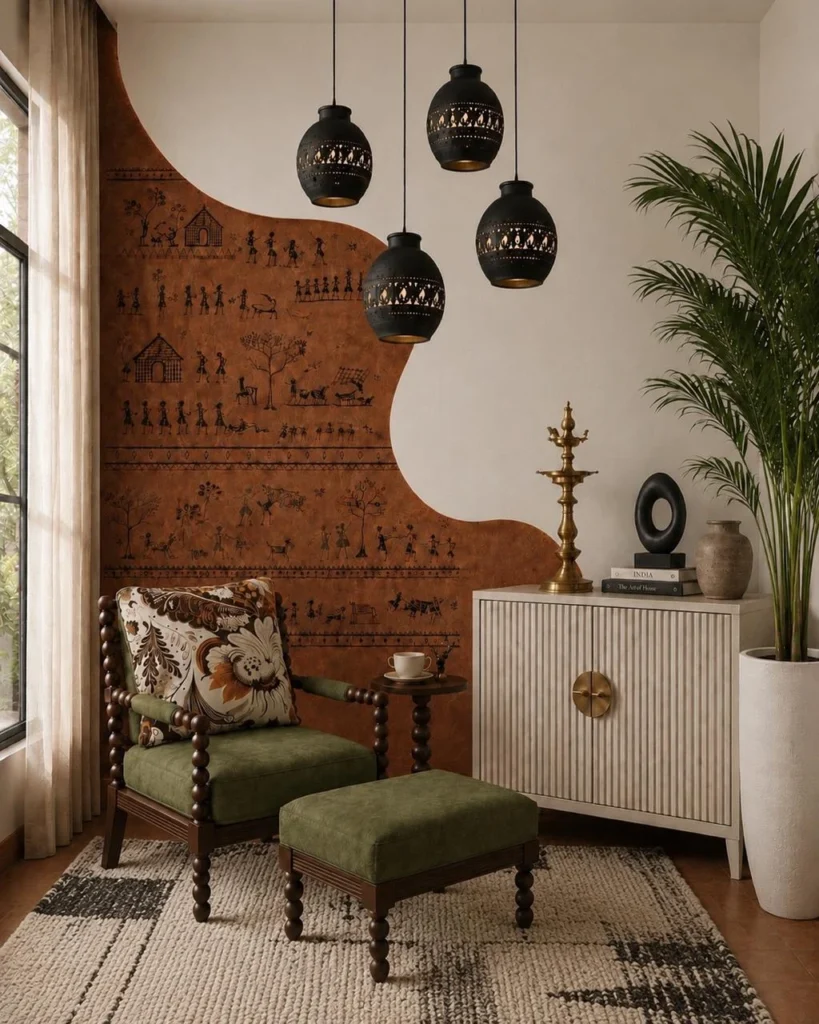
A compact nook is an ideal place to explore Indian craft more expressively. Murals, regional textiles, turned-wood furniture or metal lamps can communicate a personal connection to culture. We balance these elements with clean surfaces and modern proportions. The result is not a museum-like display, but a usable corner that carries a story and strengthens the home’s identity.
Traditional Vs Heritage - What is the difference
Yes. They overlap, but the balance between old and new is different. Traditional Indian interiors use heritage elements as the main design language—ornate carved furniture, rich colours, patterned textiles, temple-inspired details, brass décor, heavy woodwork and layered ornamentation. Contemporary Indian Heritage interprets those elements more selectively. Traditional arches, jali patterns, brass accents or Indian artwork are combined with clean furniture, neutral colours, simpler layouts and modern lighting.
Book Design Discovery call
Share your details and we will connect to schedule Session.
You can also directly contact us via: